
 Facebook
 X
X
 Pinterest
 Copy Link
Charleston: Bremerton History Meets Business Community
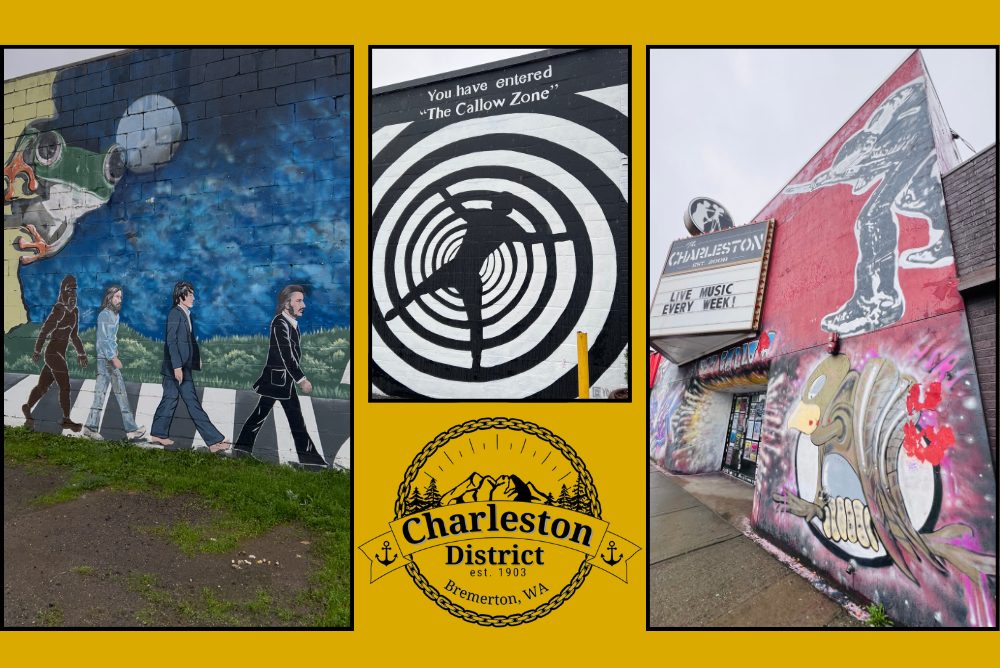
Once a bustling city, Charleston was annexed into Bremerton almost 100 years ago. Step back in time as you wander this neighborhood, steeped in history and charm. Now, a new chapter is unfolding. In recent years, vibrant shops, cozy cafes, and innovative creative spaces have moved in next to longstanding businesses that have seen generations come and go. We were excited to learn more about this area and turned to Reama Bubblez, business owner and Charleston Business District board member, to answer our questions.
For folks who don’t know about the Charleston Business District, what is the one thing you’d want to tell them?
Charleston District is fun to visit because it is eclectic, diverse, and local. The businesses offer something for everyone! Art supplies, home decor, games, typewriters, vintage records, haircuts and barbers, auto repair, and more are available within just a few blocks.
Art is everywhere in Charleston. Murals cover the outside of many buildings, and inside, artists display their work on shop walls. Many stores offer supplies or classes for different creative outlets, like stained glass at Eastern Wind Glass or clay at Earth House Studio. Working artists fill spaces like Triple Crown Tattoo Studio, Rimbert Illustration, and George Stenberg Photography.
Many of the business owners live within a mile or two of the district, which brings a different vibe to the neighborhood. Business owners show up to do litter pick ups, host community events, and work together to improve the area with monthly meetings and events. They are invested in revitalizing this area and it shows. There’s a special magic about Charleston.
This Bremerton district has a rich history. What can you tell us about it?
Charleston District is a historic part of Bremerton and Kitsap. Charleston was an independent city, established before Bremerton and annexed about 25 years later in 1927. Some of the businesses have been here since the 1940s, like Kitsap Key and Bike and McGavin’s Bakery.
This was the place to be in the 40s and 50s. From pharmacies to fur shops to hardware stores to the world-famous pink champagne cake at McGavin’s, if someone was shopping, this is where they would stop. Neighbors came from all directions to stroll the streets of Charleston.
Many businesses have been here 20 years or longer, like Unique Experience, echo artworks, Suzy’s Kitchen, Discordia Games, La Poblanita, Abraham’s House, Smitty’s Tattoo, The Charleston, China Wok, and Amy’s Decadent Chocolates.
The latest crop of businesses kicked off in 2020 with Cafe Corvo. In the last several years, new businesses continue to roll in. Rimbert Illustration recently celebrated their fourth anniversary. Spread Supplies, Moments in Bremerton, Pop Culture Tattoo, People’s Exchange, Little Bee Home, Jasper Blue Photography, Typewriter Fever, Ridgeline Brewing, Tolitoz Motherland Restaurant, Beats N’ Cats, and Craft Hair Studio all opened, bringing a fresh vibe to the historic neighborhood.
2026 will be an exciting year for the district with Two Rivers Tavern and Centuries Past Tavern opening. There’s also rumor of a used book store, a new event space, and more offerings opening for our community.
We’ve heard that there are many different types of restaurants/cafes. What different cuisines can be found, and do any of them have cool backstories?
Charleston District has the most diverse dining options within a small radius in all of Kitsap County. Here you can find Kenyan food at Tolitoz Motherland Restaurant, Vietnamese food at Pho Tai, Chinese at China Wok, Greek at Gyro Star and Gyro’s Etc, Korean at Suzy’s Kitchen, Mexican at La Poblanita and Aceituno’s Mexican Food, and American at Big Joe’s Sandwich Shop. Just outside the district at Callow Ave and 15th Street you’ll find Japanese dishes at Zen Ramen and Sushi Burrito and baked goods from around the world at Los Encantos World Bakery. In addition to the sit down restaurants, there are two coffee shops, Cafe Corvo and Hot Java Drive Thru. The chocolatier Amy’s Decadent Chocolates sells award winning chocolate. They also serve ice cream, milk shakes, and hot cocoa! On Saturday mornings, Sweet Dahlia Counter opens their doors, offering baked goodies. China Wok has fed Kitsap for decades, and longtime residents remember visiting this restaurant in their younger years.
More dining options are coming in 2026 with the opening of two taverns and one restaurant bar.
We love to promote shopping local for the holidays, what types of unique offerings can be found?
Gift shopping is a breeze in Charleston District. There is something for everyone here! Find home goods and handmade body products at Little Bee Home. Dig through vintage records and CDs at Beats N’ Cats. Spread Supplies sells new and used art supplies for the creative on your shopping list. Eastern Wind Glass sells stained glass art and offers classes. Typewriter Fever has hundreds of vintage typewriters for sale. Rimbert Illustration showcases the work of local artists. Abraham’s House has antique treasures, and Unique Experience sells custom apparel items, which both make great gifts. Tiny Mushroom Sign Shop and George Stenberg Photography have art, stickers, and photography that showcase local beauty and favorite spots.
Charleston is developing signature events that are gaining popularity. What are some of the annual events people won’t want to miss?
Charleston District brings the community together through events that focus on connection. The annual event not to be missed is Calloween. The Saturday before Halloween, Callow Ave. turns into a haunted junk yard with vintage cars, live DJs, performances, and trick-or-treating at nearly 30 businesses. Here are some fun photos from this year’s event.
In December, Charleston District invites both Krampus and Saint Nick to the neighborhood for “Naughty or Nice: Krampus vs. Santa Callow Face Off.” What happens when they arrive can only be described as a very merry, festive street fight. Santa and his elves take on Krampus and his entourage to find out who has the most holiday spirit. Live music, hot drinks, an elf hunt, and small-town holiday magic fill the streets of Charleston.
Cars on Callow is coming back in the summer of 2026! Look out for the Cupid Crawl for Valentine’s Day, the Spring Fling with a free bike repair workshop, and other events that fill the district calendar.
Launching in 2026, Callow Nights will happen on the third Friday of each month. Businesses stay open late, showcasing live music and neighborly love.
What else do you want people to know about Bremerton’s Charleston Business District? How can people learn more or get involved?
Charleston District has everything needed for a perfect day for tourists and locals. Public art and grand murals are around every corner. Places to connect and tasty food make a visit to Charleston good for the heart and the belly.
This area is built up by a tight-knit group of business owners and neighbors dedicated to revitalizing the historic neighborhood. We meet on the third Tuesday of every month from 6:00 – 7:00 PM and welcome anyone to join us in talking about the future of the Charleston District. Follow Charleston District on social media for updates!
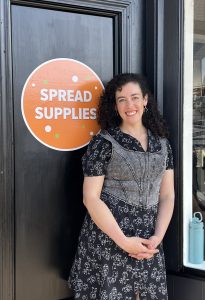 Reama Bubblez owns Spread Supplies, Kitsap County’s only new and used art supplies store. She opened the store in 2023, after feeling sticker shock over big-box art supplies prices and guilt over the amount of packaging that comes with buying things new. She’s given talks about the history of the Charleston District at the Kitsap History Museum, the Pacific Northwest Historians Guild annual conference at the Seattle Library, and community groups in Kitsap. An event producer, business owner, and community organizer, she weaves together her passions for art accessibility, waste reduction, and human connection.
Best Places to See Washington’s Spring Flowers in Bloom
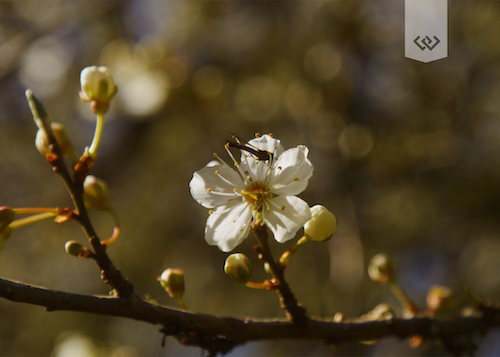
Spring is in the air! Here are some of our suggestions for the best places to see Washington’s spring flowers in bloom. Thankfully, there are many wonderful places near us to celebrate and appreciate this beautiful time of year. Mark your calendars and then hop in the car to check these out!
Bloedel Reserve – Bainbridge Island
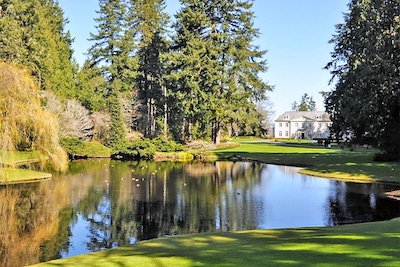
Photo by Chris Boone.
A spectacular botanical garden, the Bloedel Reserve flourishes this time of year. Undoubtedly, the Japanese Garden is a must-see for anyone who wants to experience a tranquil retreat. It has also been named one of the top ten Japanese Gardens in the United States by the Journal of Japanese Gardening. Due to the COVID-19 pandemic, tickets are released in batches and must be reserved in advance. Tickets are $17 for adults, $10 for students (13-18), and $6 for youth (5-12) with college, military, and senior discounts. They also offer annual memberships.
Heronswood – Kingston
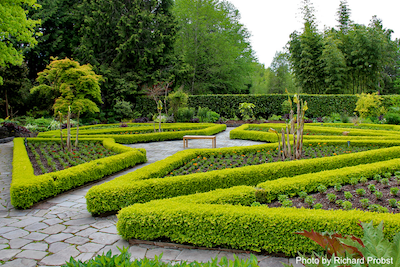
Photo by Richard Probst.
This botanical gem was created by Dan Hinkley and his husband, architect Robert L. Jones. It spans almost 15 acres of fantastic flora from all over the world. After lying dormant for nearly six years, Heronswood was renewed through the S’Kallam Tribe. They earnestly restored the garden to its former beauty. This spring, they will be dedicating a stumpery, an artistic display of tree stumps, that recounts the history of the S’Klallam Tribe with the local timber industry. Heronswood opens on April 1st and tickets will be $10 for adults, $5 for children (7-17), and ages 6 and younger are free.
Albers Marcovina Vista Gardens – Bremerton
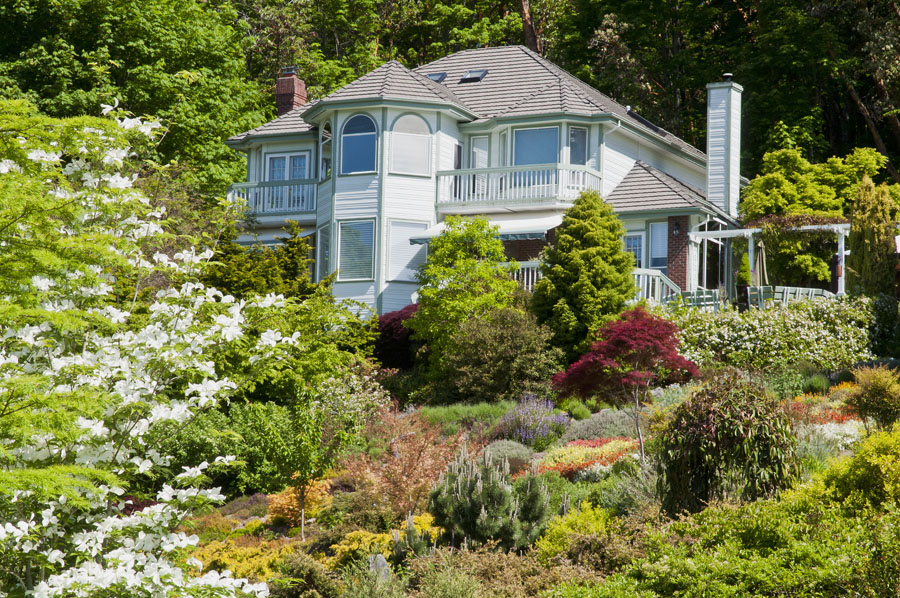
Photo by Albers Marcovina Vista Gardens.
This wonderful botanical garden is consistently expanding to feature more and more flora for visitors to enjoy. With 15 distinct areas, you’ll leave in awe of thousands of aesthetically arranged plants. On April 24th, they will be hosting “The Beauty of Spring ” tour from 10:00 AM – 12:00 PM. Tickets are completely free, but register online.
Skagit Valley Tulip Festival
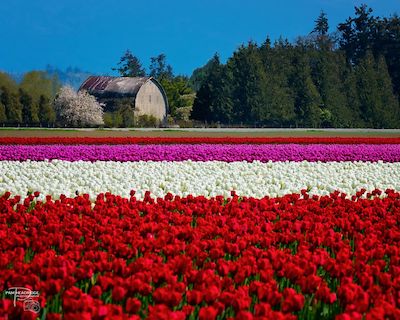
Photo by Pam Headridge.
In April, Skagit Valley will be hosting its annual Tulip Festival. Millions of tulips collectively create an extravagant display to celebrate spring. And, fun fact: more tulip and daffodil bulbs are produced there than in any other county in the United States. Designed as a driving tour, these flower fields can be seen anytime during April completely free of charge.
For a more in-depth experience, you can visit Tulip Town every day in April from 8:00 AM – 7:00 PM. Tickets are $10 for ages 12 and up, $5 for ages 6 – 11, and kids 5 and under are free. They offer an indoor/outdoor tulip garden, trolley rides (weather dependent), local goods, treats, and more.
Rhododendron Species Botanical Garden – Federal Way
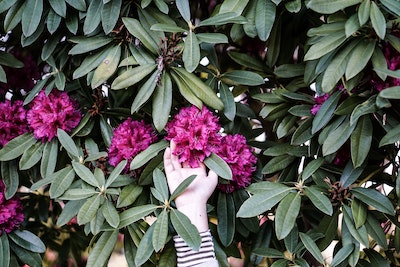
What better way to appreciate Washington’s state flower than by visiting the Rhododendron Species Botanical Garden in Federal Way? Located between Seattle and Tacoma, this 22-acre woodland garden has the largest collection of Rhododendron species in the world. Get a glimpse of what they offer by watching this enticing video from 2019. Peak bloom time is mid-March through mid-May. They’re open Tuesday – Sunday, 10:00 AM – 4:00 PM. Be sure to read their updated policies before visiting. General admission is $8, and it’s $5 for seniors and students, free for military and children under 12.
Seattle Cherry Blossoms and Japanese Cultural Festival
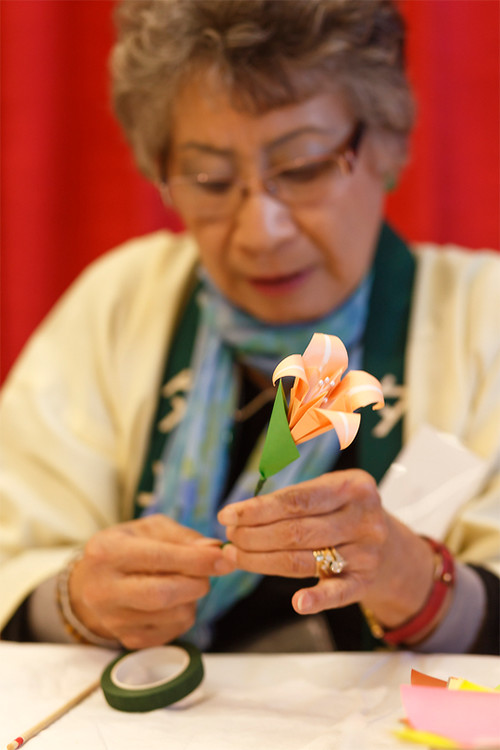
Origami flower. Photo by Andy Ahlstrom.
Every year, this free festival is held at Seattle Center and it combines cultural traditions with various types of entertainment to celebrate Japanese culture. They typically have everything from martial arts demos to Japanese food, traditional music to origami contests. Due to the pandemic, the festival will be happening virtually again this year, from April 9 – 11. Check out videos from last year’s fun virtual event.
Although the University of Washington campus is typically a great place to stroll beneath the blossoming trees, UW is once again asking people to view their beautiful blossoming trees virtually this year due to COVID-19. If you’re in the Seattle area, you can use the Seattle Department of Transportation’s interactive map of trees to see where you can drive to enjoy blossoms. To search for cherry trees in a specific neighborhood, click the tab at the top that’s titled “Explore Street Trees”. Then scroll down on the left-hand side and click on “Trees By Type” to look for trees with the “Prunus” genus to view cherry or plum trees.
Silverdale & Bremerton: Strong Communities, Convenience and Charm
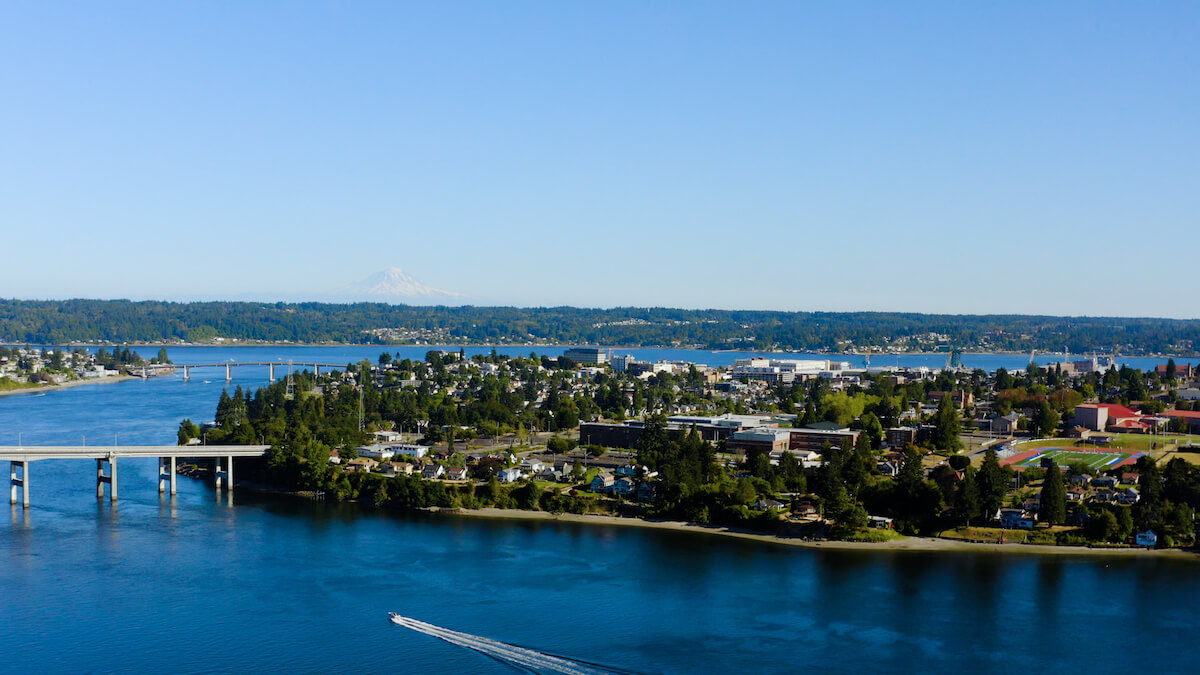
Surrounded by Puget Sound and the Olympic Mountains, Silverdale and Bremerton boast a range of businesses and entertainment as well as a strong military presence.
From Settlers to City
On a beautiful, cloudy day, the Silverdale waterfront gleams with a silver glow. On shore, a bustling city center houses the most expansive shopping experience on the Kitsap Peninsula. There are local favorites like Purpose Boutique, Lisa Stirrett Glass Art Studio, and Silverdale Antiques. And, you can find everything you need by visiting Kitsap Mall, Trader Joe’s, and Costco. Great stops for a bite to eat include popular places like Monica’s Waterfront Bakery & Cafe, Jo:a Japanese Restaurant and Yacht Club Broiler.
While it’s a strong center for economic development today, Silverdale actually started in a modest fashion. First formed in 1920 as an unincorporated port to serve the logging industry, Silverdale transitioned to a farming town. This gave way to Scandinavian immigrants who became the first permanent settlers in Silverdale.
-

- Aerial view, Port of Silverdale, 1952
-
- Visitors at the old dock in Silverdale on Dyes Inlet, Kitsap County
In the decades that followed, the introduction to the ‘Bremerton-to-Poulsbo Highway’ changed Silverdale into Kitsap’s busy commercial center. Over time, Silverdale began adding amenities like the popular Silverdale Waterfront Park to honor the proud Old Town port of its early days.

Bremerton’s Beginnings
Founded by the vision of Real Estate businessman, William Bremer, and platted in 1891, Bremerton houses the largest Naval Shipyard on the West Coast. The Puget Sound Naval Shipyard survived both World Wars and was even expanded during the Great Depression.
Points of Pride
Today, Bremerton is the largest city in Kitsap County. It has a population of over 41,000. By ferry, Bremerton residents reach Seattle within an hour to enjoy the larger city life across Puget Sound. While the military defined early Bremerton and still shapes it today, business development paved the way, specifically within the arts. The now-famous Admiral Theatre has housed some of the greatest names in music and entertainment. It sets the stage for an Art Deco-inspired downtown, complete with art galleries and Historic Roxy Theatre.
And, fun fact: music legend Quincy Jones grew up in Bremerton. The city dedicated an entire square downtown to honor his legacy as the most famous hometown artist. Hysterically, Quincy recalled his Bremerton youth on The Late Show with Stephen Colbert, saying, “What happened was … we wanted to be baby gangsters and like, rule Bremerton.”

Bremerton also offers fabulous eateries like La Fermata, voted this year’s Best Romantic Dinner in Central Kitsap and Bremerton, and Silver City Brewery, bottling wonderful craft ales alongside gourmet pub food. Axe & Arrow Gastropub offers delicious options as well, and Chef Tabura was the winner of Food Network’s “The Great Food Truck Race” in 2013.

Wonderful Events and Outdoor Escapes
Silverdale and Bremerton are popular shopping and dining destinations with distinct features. Additionally, they offer a strong sense of community through many local organizations and events. Fun annual festivals include the Blackberry Festival, Armed Forces Day Parade, Wayzgoose Arts Festival, and Whaling Days.
These charming cities harbor many larger city conveniences yet they are surrounded by nature. Nestled beside the epic Olympic Mountains, Silverdale and Bremerton offer a variety of nature trails and parks to get away from it all. Here’s a starter pack of places to explore: Illahee State Park, Manchester State Park, Newberry Hill Heritage Park, Wildcat Lake County Park, and Old Mill Park. From functional to robust, Silverdale and Bremerton have blossomed into truly unique cities with offerings for all.
-

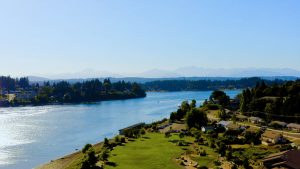
- Lions Park by Leo Phillips
-
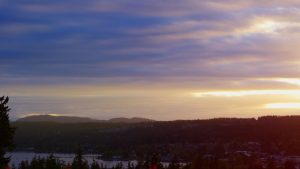
- Silverdale Sunset by Leo Phillips
The Rich History of the Suquamish Tribe
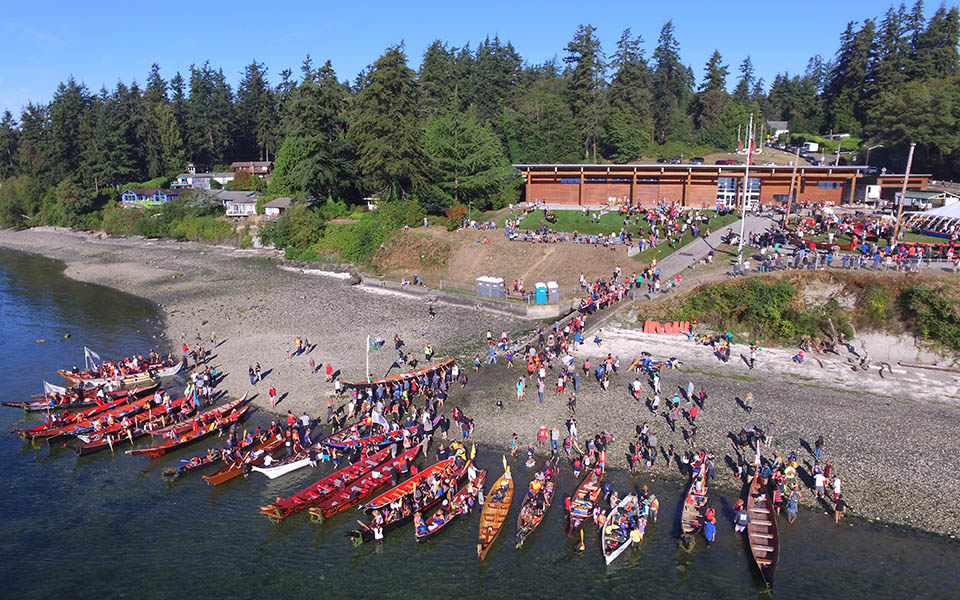
All media courtesy of the Suquamish Museum.
Nothing embodies perseverance quite like the Suquamish Tribe. Thriving with tradition and culture, the Suquamish Tribe has lived in tandem with the land, now Kitsap County, for centuries. The Suquamish lived communally in permanent villages along the shore near rivers and streams of the Puget Sound during the winter. They had winter villages in places like Suquamish, Poulsbo, Silverdale, Port Madison, and Battle Point. During the other seasons, many left their residences in family canoes to travel to temporary camps at fishing, hunting, and gathering grounds.
The Suquamish people’s indigenous language is Lushootseed, a linguistic member of the Coast Salish language group spoken by first peoples throughout the Pacific Northwest. Due to federal assimilation policies, their language was almost lost. But they’ve fought hard to preserve it. They established a Traditional Learning Program that teaches Lushootseed to children and community members.
Historical Attractions
Part of the Port Madison Indian Reservation, the Suquamish village has magnificent ocean and mountain views. Native and non-native residents live there. The waterfront is adorned by restaurants, local businesses, and cultural attractions. One of the most notable and must-visit places is Chief Seattle’s Gravesite. This monument honors the legendary leader of the Suquamish Tribe. Chief Seattle was known for his ideas around ethics, spirituality, and environmentalism.
Learn more about Chief Seattle from Suquamish Elder Marilyn Wandrey who shares important historical details in the video below, courtesy of the Suquamish Museum.
The House of Awakened Culture stands tall by the waterfront. The House and surrounding outdoor area hosts many events that teach and celebrate the Suquamish culture. Programs include basket weaving, Lushootseed language lessons, Youth Canoe Journey Trainings, and traditional Suquamish ceremonies.
Old Man House Park is the site of the largest Suquamish winter village located on the shore of Agate Passage. The home of Chief Seattle and Chief Kitsap once stood there before the U.S. government destroyed it in 1870.
-

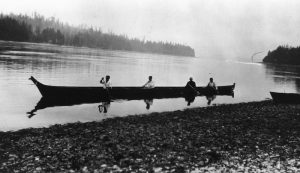
- Canoe in Suquamish/Agate Pass, circa 1930’s. Photograph by Bertelson
-
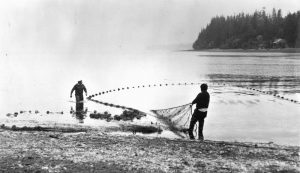
- Beach seiners on Agate Pass, Emmanuel Alfred, Justin Alfred of the Suquamish Tribe
-
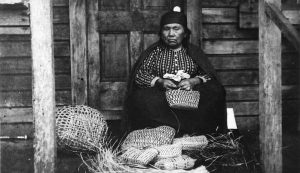
- Basketmaker Tennessee at her home on Bainbridge island
-
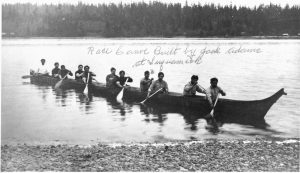
- Race canoe built by Jack Adams: Seabreeze
Photographs courtesy of the Suquamish Museum
The Suquamish Tribe Today
In the face of European colonization, the Suquamish Tribe has persevered. Thanks to the selfless acts of Chief Seattle and Chief Kitsap working to protect their people, the Suquamish continue to rebuild their community and thrive. Through self-determination, the Suquamish spent decades building government relationships with federal, state, and local agencies. Much of the Tribe has fought to preserve hunting and fishing traditions for future Suquamish generations.
Today, the Suquamish Tribe devotes resources and time to instilling Suquamish pride in the current generation. The Tribe’s history and traditions are celebrated throughout the year and are shared through cultural and educational activities. Additionally, Chief Kitsap Academy (CKA) is one of the first tribal compact schools in Washington. Serving grades 6 – 12, CKA’s vision is that “every graduate is a confident, courageous, thoughtful, and respectful member of our community”. CKA also expects students to “pursue additional training and/or education and take on leadership roles in the Suquamish Tribe, the local area, and our global community”.
As their neighbors, we are proud to highlight the Suquamish Tribe’s history, culture, and traditions, recognizing that they lived here long before us. Today, the beautiful Suquamish Museum and their Tribe’s website provide a wealth of information to honor their heritage and educate locals and tourists alike.
